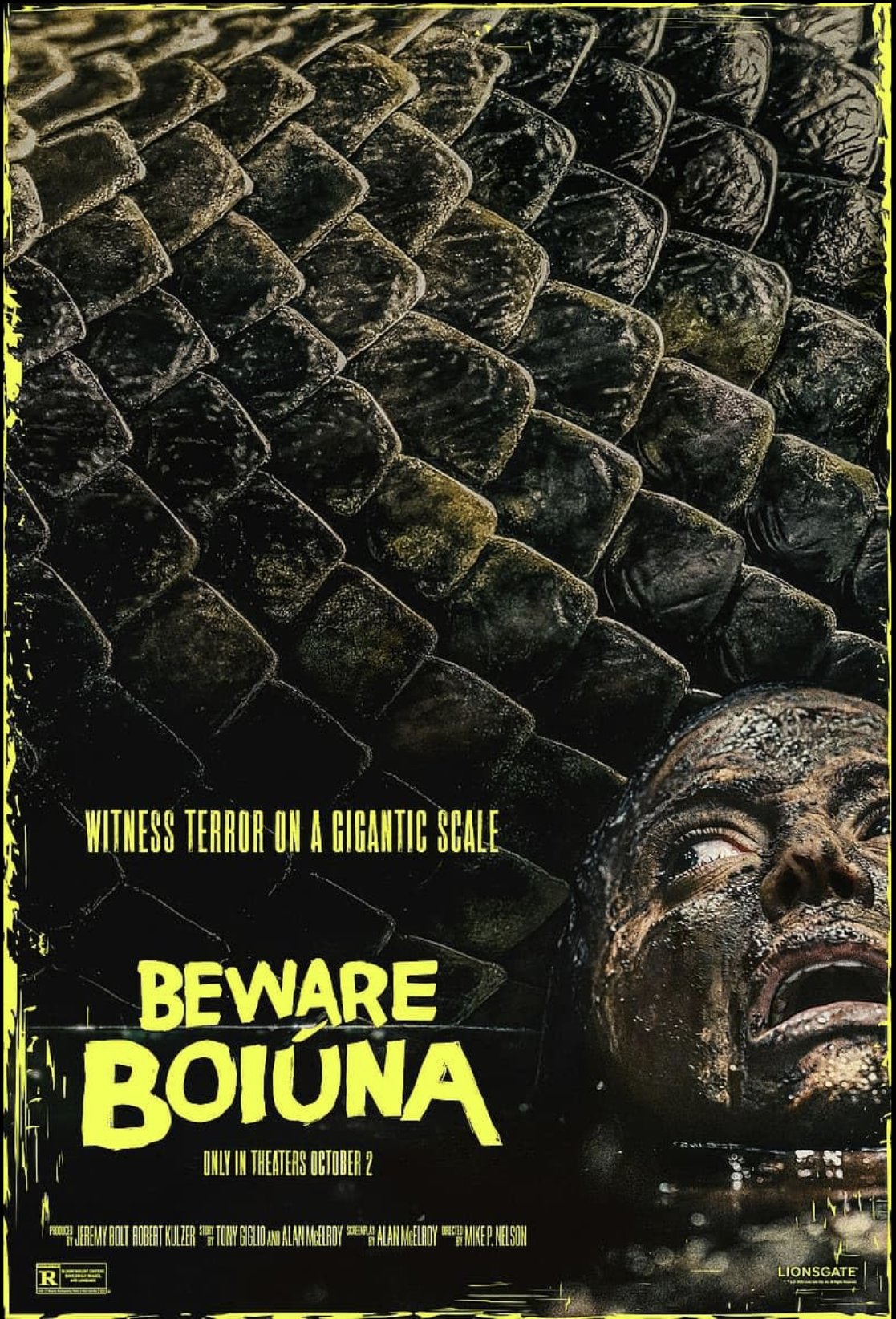
Beware Boiúna enters the creature-feature tradition with an irresistible horror premise: a giant snake, the Amazon and characters forced to confront a threat larger than anything ordinary survival instincts can comfortably explain. Yet a strong monster concept needs more than scale. It needs suspense, geography, character investment and a sense that the creature's presence is reshaping every decision. This Beware Boiúna review finds a film with atmospheric ingredients and flashes of danger, but one that too often hides its central attraction behind frantic presentation and an overly serious approach.
Beware Boiúna review: a monster movie that withholds its monster
Creature features depend on a careful relationship between revelation and anticipation. Showing the monster too early can reduce mystery, but withholding it for too long can become frustrating if the surrounding drama is not compelling enough. Beware Boiúna leans heavily toward concealment. The snake is treated as an overwhelming presence, yet the film does not always provide the visual or narrative payoff that such a threat promises.
The Amazon setting should be one of the film's greatest strengths. Dense vegetation, waterways and limited visibility naturally create uncertainty. A predator can disappear almost instantly, and characters can never be certain whether movement in the environment is harmless or deadly. The film occasionally uses that geography effectively, but aggressive camera movement and an insistent score can substitute noise for tension.
Suspense works best when the audience understands space
Horror becomes more frightening when viewers know where characters are, where danger might be and what options remain. Clear geography allows suspense to build because the audience can anticipate consequences. When editing or camera movement becomes too chaotic, the threat may feel less immediate because viewers are spending energy simply trying to understand what is happening.
Beware Boiúna sometimes confuses intensity with suspense. Rapid visual movement and loud musical cues can create momentary stimulation, but dread requires patience. The most effective giant-creature films often allow silence and stillness to do part of the work. A ripple in water or an unexplained absence can be more unsettling than constant sensory pressure.
The folklore potential deserves more room
The title evokes a cultural and mythic dimension that could distinguish the film from generic animal-attack stories. Folklore can transform a creature from a biological threat into something connected with memory, place and collective fear. When horror draws deeply from local traditions, the environment itself begins to feel meaningful rather than functioning only as scenery.
The film has opportunities to build that richer identity, but the dramatic execution does not always give those ideas enough space. A stronger connection between character history, regional mythology and the creature could have made the danger feel specific to this story rather than transferable to any jungle monster movie.
Taking the material seriously is not the problem
A giant-snake movie does not need to become camp. Serious creature horror can be powerful when the characters respond credibly and the filmmaking creates genuine physical stakes. The difficulty comes when solemnity is not matched by emotional depth. If characters remain thinly drawn, an intensely serious tone can make the story feel heavier without making it more affecting.
Moments of humour or personality could have created contrast and made the danger sharper. Horror often benefits from giving audiences something warm or human to lose. Without that contrast, the film can settle into a continuous register of anxiety that eventually becomes less effective.
The creature-feature standard has changed
Modern audiences have access to decades of monster cinema, from practical-effects classics to sophisticated digital spectacles. A new creature feature therefore needs either exceptional execution or a distinctive perspective. Budget limitations do not automatically prevent success. Suggestion, sound and clever staging can create memorable monsters without constant visual effects.
Beware Boiúna's challenge is that its central creature remains the reason many viewers will arrive, and the film cannot fully escape the expectation of seeing that premise delivered. When the snake is obscured or the action becomes visually difficult to read, the movie risks withholding the very experience its title promises.
Final verdict
Beware Boiúna has a strong location, a marketable monster and the foundations of an atmospheric survival story. It also contains enough craft to suggest what a more controlled version of the film might have achieved. But the balance between mystery and payoff never becomes fully satisfying, while the forceful score and restless presentation can weaken rather than intensify the scares. For committed creature-feature fans, the Amazon setting and giant-snake premise may still provide curiosity value. Viewers looking for carefully constructed suspense or a richly developed folkloric horror experience may find the execution less rewarding.
PUBLISHED
BY
SUYASH PACHAURI,
FOUNDER & OWNER,
GLOBAL BOLLYWOOD | THE HOLLYWOOD SCOPE