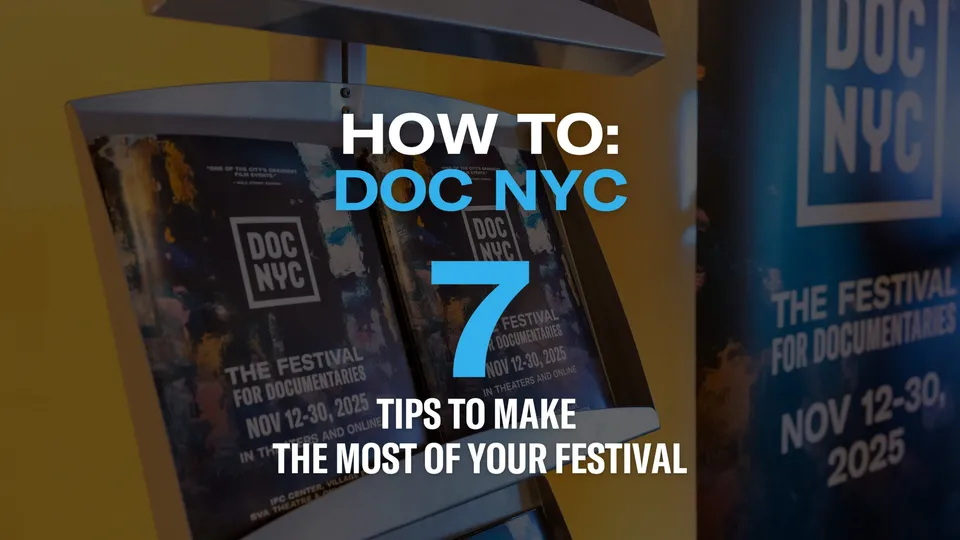
DOC NYC opened its seventeenth edition on November 11, 2026, placing nonfiction filmmaking at the centre of a programme that stretches beyond the city's cinema screens. Its in-person screenings run through November 19, while a selection of films remains available through the online programme until November 29. This distinction matters for audiences discovering the festival after its opening week. The event is not simply a sequence of premiere-night headlines. It brings together different kinds of documentary storytelling, from intimate portraits and artistic journeys to investigations of working life and social institutions. With more than 200 films and numerous filmmaker events in the wider programme, the festival offers an unusually broad picture of the subjects occupying documentary cinema this year. The following guide considers the continuing programme and its significance, rather than presenting the original opening as a fresh announcement.
A Festival With Two Different Viewing Windows
The physical festival takes place in New York, with screenings scheduled at IFC Center, SVA Theatre and Village East by Angelika, alongside other designated programme spaces. The main in-person window ends on November 19, but the online strand runs through November 29. That gives the festival a second life for viewers who did not attend in person. Online viewing should not be mistaken for worldwide access: availability, eligibility and screening periods depend on the festival's individual listings and platform rules. Anyone planning to watch a particular title should check its current official listing before purchasing access. For film enthusiasts, the split format also changes how the event can be followed. A cinema screening may become a conversation with the director, while an online viewing allows the work itself to travel further than one evening's audience.
The Opening Film Places Indigenous Art in the Spotlight
The opening-night selection, The Hummingbird Paints Fragrant Songs, received its United States premiere on November 11. The film follows Shipibo artist Sara Flores, whose intricate geometric work connects artistic practice with knowledge rooted in the Peruvian Amazon. This is a distinctive choice for a festival seeking to frame documentary as something more expansive than the conventional exposé. The story touches on how art can preserve cultural knowledge while reaching new audiences. Its position at the beginning of the festival shows the value of giving visual artists and Indigenous voices a prominent public platform. It is possible to discuss that curatorial emphasis without pretending to have personally reviewed the film or assuming the experience of every viewer will be the same.
What an Opening Selection Can Represent
A documentary festival's opening title does more than provide a ceremonial first screening. It suggests the kind of attention that organisers hope audiences will bring to the rest of the programme. In this case, a film about visual language and cultural continuity points toward the relationship between an artist's work and the community that gives it meaning. It also invites questions about who gets to interpret traditions when they enter international museums and exhibition spaces. Those questions can remain productive long after the opening-night event has passed. For readers choosing films from the remaining online programme, the title serves as one example of the creative range that makes a festival different from a conventional weekly release calendar.
Union Town and the Documentary View of Working Life
The festival's centerpiece, Union Town, provides a contrasting perspective. Directed by Barbara Kopple, it examines groups of workers pursuing stronger protections and a more sustainable place in the modern economy. The subject includes delivery work and union organising, bringing attention to people whose labour is familiar but whose negotiations are often overlooked. Kopple's established connection with labour-focused nonfiction gives the selection a wider historical context. The film's place in the programme also underlines an important quality of documentary cinema: it can spend time with institutions and communities that change slowly, even when daily headlines move on. A film about work is not automatically a verdict on any company or union. Its value as a festival subject lies in the opportunity to examine competing pressures and lived experiences in depth.
The Short Lists Extend the Conversation Beyond Premieres
The 2026 programme includes short-list sections and films being discussed within the wider documentary awards conversation. Among the scheduled titles are American Doctor, directed by Poh Si Teng, and Time and Water, directed by Sara Dosa. One follows doctors responding to medical emergencies in Gaza, while the other approaches climate change through an Icelandic poet's reflections on disappearing glaciers. The breadth of these subjects matters. A festival can present urgent humanitarian material alongside observational, personal and environmentally focused work without treating them as interchangeable. Selection should not be confused with a guarantee of future awards. Instead, short-list programmes act as a practical discovery route for audiences trying to understand the year's range of nonfiction approaches and the filmmakers experimenting with them.
A Wider Definition of Documentary Relevance
The programme also moves across music, social history, ecology and public debate. A filmmaker may start with an individual and arrive at a larger question about migration, work or belonging. Another may begin with a public event and explore its effect on a family or neighbourhood. Not every film must contain a dramatic revelation to merit attention. Long-term observation, carefully assembled archives and the preservation of personal testimony can all offer forms of knowledge that a short news report cannot. Readers should approach titles about ongoing conflicts or controversial figures with particular care: programme descriptions explain what the films set out to examine, not an independently verified conclusion about every claim presented within those films.
Why DOC NYC PRO Matters to Independent Filmmakers
The event is also connected to professional conversations about the craft and business of documentary production. DOC NYC PRO includes sessions focused on pitching, funding and the practical path from a working idea to an audience. A project may have compelling access to its subject and still need help shaping its proposal, identifying responsible financing or establishing an effective distribution strategy. For emerging producers, such settings can make the difference between a film that exists only as research and one that can move into a structured production process. These professional sessions are not a promise of a deal or a shortcut to international recognition. Their value comes from bringing filmmakers, practitioners and potential partners into the same discussion about how nonfiction work is developed and presented.
How Viewers Can Use the Remaining November Programme
With the in-person programme reaching its final day on November 19 and the online window continuing until November 29, viewers have an immediate reason to revisit the official schedule rather than rely on a week-old announcement. The most useful approach is to identify a film by title, confirm whether it has an online screening, check any territorial restrictions and note its individual availability period. Film festival programmes can change, and ticket or pass options can differ between physical and virtual attendance. It is equally important to distinguish a film's scheduled screening from a general commercial release. Appearing at a festival does not necessarily mean it can be rented or streamed from every country after the event. Careful checking keeps an informative guide from becoming an inaccurate viewing promise.
The Longer-Term Importance of Nonfiction Storytelling
The ongoing festival is useful to readers because its programme contains work that will continue to matter beyond November. Questions of cultural identity, labour, climate change, history and community memory rarely disappear when a premiere screening ends. Documentary films can assemble evidence, testimony and artistic interpretation into a form that rewards sustained attention. That does not make every documentary neutral or beyond criticism. Readers should remain alert to the difference between a filmmaker's argument, a participant's recollection and independently established facts. The strength of a broad festival is that it offers many methods of approaching difficult subjects, allowing audiences to compare styles of storytelling instead of assuming that one film represents the entire field.
A Continuing Festival, Not a New Announcement
DOC NYC's 2026 edition began on November 11, but its calendar still carries practical value as the online programme approaches its November 29 conclusion. For audiences following cinema internationally, that remaining access is a reason to take a fresh look at the films rather than simply replay the opening-night news. For filmmakers, the combination of public screenings, discussion and industry programming illustrates how a documentary event can support both the finished work and the people building the next generation of projects. This retrospective guide records the programme's verified dates and describes the areas worth exploring. It does not suggest that all titles are still available everywhere, that the films have been personally viewed for review, or that an announcement from earlier in the month is breaking today.
PUBLISHED BY SUYASH PACHAURI, FOUNDER & OWNER, GLOBAL BOLLYWOOD | THE HOLLYWOOD SCOPE.