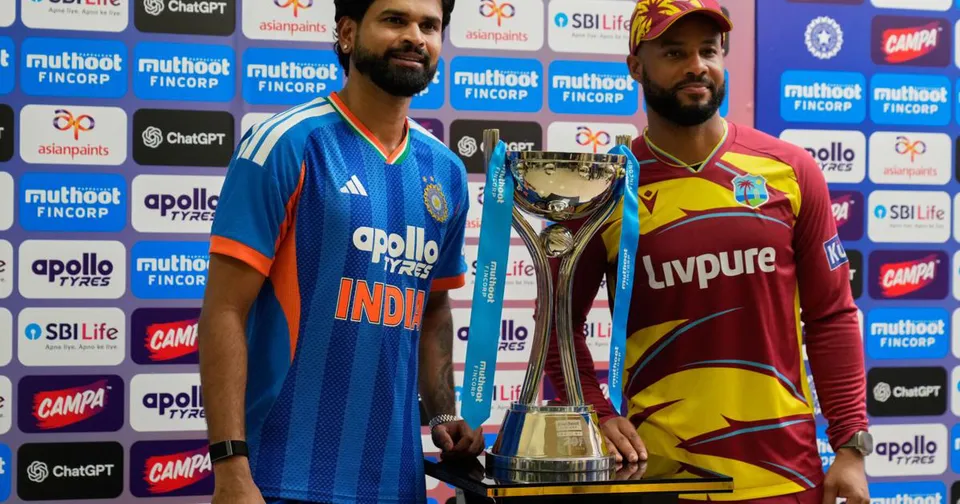
The fifth T20 international between India and West Indies ended without a result after repeated rain reduced the contest to nine overs per side and then stopped it again. India had raced to 118 for five in 7.4 overs when play became impossible, leaving a potentially explosive finish unresolved. With the decider washed out, the five-match series ended 2-2. The India West Indies fifth T20I washout was frustrating, but the brief action still produced enough urgency to show how dramatic the final game might have become.
A Match Rewritten by Weather
The original contest was compressed before the first ball of the shortened game, forcing both teams to abandon normal pacing. In a nine-over innings, every dot ball becomes expensive and every wicket can change the available hitting order.
Further rain then interrupted even that revised plan. Once the surface, outfield and available time could no longer support a safe completion, officials had no meaningful option beyond a no result.
India's Rapid Start
Ishan Kishan struck 30 from 10 balls, immediately accepting the demands of the reduced format. His innings ensured India did not waste the powerplay recalibrating after the delay. Shreyas Iyer added 22, maintaining the rate even as wickets fell.
The aggression came with risk, and five wickets in 46 balls showed West Indies were still creating chances. The innings was not simply one-way hitting. It was a contest between boundary pressure and the possibility of a collapse.
Naman Dhir's Late Burst
Naman Dhir was unbeaten on 24 from only six deliveries when play stopped. In a match this short, such an innings can transform a projected total within minutes. His hitting pushed India toward a score that would have demanded an exceptional chase.
Because the innings remained incomplete, any final projection is uncertain. Two more balls can produce two wickets or twelve runs. The unfinished state is precisely what made the washout disappointing.
A Series Ends Without a Decider
Both teams entered with two victories, so the final match carried a clean winner-takes-series structure. The weather removed that resolution and preserved the 2-2 scoreline. A drawn series can feel incomplete, but it accurately reflects two sides that traded control across the previous four games.
There is no basis for assigning the series to either team through hypothetical outcomes. India had built a strong total, but West Indies had not begun the chase. T20 cricket repeatedly shows that intimidating rates can be matched when conditions and momentum change.
Shai Hope's Series
Shai Hope was named Player of the Series after scoring 261 runs. His output provided West Indies with consistency across changing match situations and was central to their ability to remain level entering the decider.
The recognition is important because the final washout could otherwise dominate memory of the tour. Hope's runs were accumulated over completed contests and give the series a clear individual performance to retain.
Planning Around Rain
Weather interruptions test more than ground drainage. Teams must adjust batting orders, bowling plans and target calculations with little notice. Players prepare for one format and may be asked to perform in something closer to an extended super over.
Broadcasters and spectators also absorb the uncertainty. Clear communication about inspections and cut-off times is essential, especially when a decisive match draws a large audience. Safety remains the first obligation even when competitive stakes are high.
What the Draw Reveals
India displayed batting depth and explosive intent in the brief innings, while West Indies leave with a shared series and the leading run-scorer. Neither side receives the closure of a completed decider, but both can take evidence into their next assignments.
The final scoreline of 2-2 is not a substitute for the match that rain prevented. It is the honest conclusion to a competitive series. The abandoned chase will remain an unanswered question, while the earlier results and Hope's consistent batting provide the more reliable measure of what the teams achieved.
Selection teams will still have usable information from the night. Kishan's immediate acceleration and Dhir's finishing burst strengthened India's depth options, while the West Indies attack showed it could keep taking wickets even under severe scoring pressure. Those observations should be separated from any claim about who would have won. A truncated innings can reveal skills without delivering a valid result. The series ends with competitive balance, an outstanding individual run aggregate and a reminder that weather can deny sport its preferred conclusion without erasing the performances that came before it.
PUBLISHED BY SUYASH PACHAURI, FOUNDER & OWNER, GLOBAL BOLLYWOOD | THE HOLLYWOOD SCOPE