INTRODUCTION
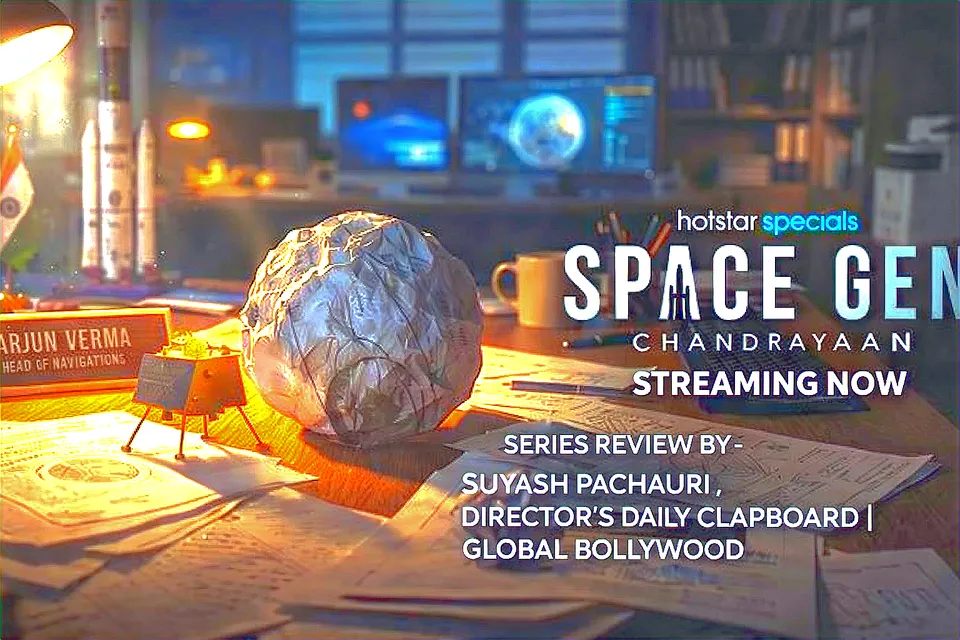
In recent years, Indian content creators have increasingly focused on real-life stories of national pride, innovation, and resilience. From biopics of sports icons to dramatizations of political moments, storytelling in India is evolving rapidly. One ambitious addition to this trend is “Space Gen: Chandrayaan”, a web series that dramatizes India’s historic moon missions, particularly focusing on Chandrayaan-1, Chandrayaan-2, and the globally celebrated Chandrayaan-3.
“Space Gen: Chandrayaan” does not merely aim to recreate scientific milestones; it seeks to humanize them. The series showcases the struggles, failures, triumphs, and emotional journeys of the scientists, engineers, administrators, and dreamers behind India’s lunar ambitions. This is not just a series about rockets and satellites; it is about belief, perseverance, and a nation learning to look upward with confidence.
The series arrives at a time when India’s space achievements are receiving unprecedented international recognition. The soft landing of Chandrayaan-3 near the Moon’s south pole, a first in human history, placed India firmly in the elite club of spacefaring nations. This web series captures that zeitgeist, making science accessible, emotional, and cinematic.
From a narrative standpoint, “Space Gen: Chandrayaan” balances technical authenticity with dramatic storytelling. This is a difficult task that many such projects fail to achieve. Yet, this series largely succeeds in making complex scientific processes engaging without oversimplifying or sensationalizing them.
SCREENPLAY & SCRIPT SENSE
The backbone of “Space Gen: Chandrayaan” lies in its tightly crafted screenplay. The writers have made a commendable effort in blending real historical events with dramatized personal arcs, ensuring that the series remains fact-driven while emotionally resonant.
The script avoids the pitfall of becoming a dry documentary. Instead, it structures the narrative around conflict, aspiration, and resolution—core elements of good drama. Each episode is built around a specific phase of India’s lunar journey: conception, development, setbacks, failure, and finally, triumph.
Layered Storytelling
What stands out most is the layered storytelling. While the primary narrative revolves around Chandrayaan missions, subplots explore:
Political pressure on scientific institutions
Budget constraints and bureaucratic delays
Personal sacrifices of scientists
Gender representation in space research
Public perception and media pressure
The dialogues are restrained, intelligent, and rooted in realism. There are no unnecessary melodramatic monologues, a trap many patriotic dramas fall into. Instead, emotions are conveyed through silences, looks, and understated exchanges.
The writers deserve credit for not turning scientists into larger-than-life superheroes. They are portrayed as humans—brilliant but flawed, confident yet vulnerable. The failure of Chandrayaan-2 is depicted with remarkable maturity, not as defeat but as a stepping stone toward greater learning.
The pacing of the script is also well-judged. Technical explanations are integrated naturally through conversations and visuals rather than forced exposition. This allows even non-science viewers to follow the story without feeling overwhelmed.
DIRECTION
The direction of “Space Gen: Chandrayaan” is one of its strongest pillars. The director shows remarkable restraint and clarity of vision, ensuring the series never drifts into excessive jingoism or pseudo-scientific spectacle.
Rather than focusing solely on grandeur, the director invests in emotional authenticity. Control rooms, testing labs, meetings, and even failures are treated with the same importance as successful launches. This grounded approach gives the series a realistic tone rarely seen in Indian science-based dramas.
Narrative Coherence
The director also excels in:
Maintaining narrative coherence across timelines
Balancing personal stories with institutional processes
Avoiding over-stylization of scientific environments
Letting moments breathe instead of rushing climaxes
One particularly impressive aspect is how silence is used. Before launches, during failures, and in moments of uncertainty, silence becomes a powerful storytelling tool, replacing loud background music or dramatic camera movements.
The launch sequences themselves are handled with dignity and respect for real events. Instead of over-glamorizing them with excessive slow-motion or CGI fireworks, they are portrayed with controlled tension and authenticity.
Overall, the direction reflects maturity and confidence, trusting the subject matter enough not to embellish it unnecessarily.
ACTING
The performances in “Space Gen: Chandrayaan” are largely convincing and grounded, contributing significantly to the series’ emotional weight. The lead actors portraying senior ISRO scientists bring a quiet intensity to their roles. There are no flamboyant heroics—just steady determination, intelligence, and moral strength. Their performances are subtle, particularly in scenes involving failure, doubt, and ethical dilemmas.
Inner Conflict
A notable highlight is how actors communicate inner conflict without resorting to exaggerated emotional displays. A trembling hand before a crucial command, a long pause before answering a question, or a weary look after a setback—all these small details enrich the narrative.
The younger cast representing engineers and researchers inject energy and relatability into the series. Their enthusiasm, ambition, and occasional impulsiveness contrast beautifully with the calm, methodical approach of senior scientists.
Female characters are written and performed with respect and depth, avoiding tokenism. They are not merely symbolic representations but active contributors to mission success, portrayed with both professional excellence and personal vulnerability. Overall, the acting ensemble works cohesively, never allowing any single performance to overpower the story.
SUPPORTING CAST
The supporting cast deserves special mention for adding texture and realism to the narrative world of “Space Gen: Chandrayaan.” From bureaucrats and politicians to journalists and family members, each character feels purposefully placed rather than ornamental. These characters help contextualize the scientific journey within India’s socio-political fabric.
Impactful Portrayals
Particularly impactful are:
The portrayals of media pressure during mission failures
Political negotiations over funding and timelines
Family members coping with prolonged absences and emotional distance
These characters ensure that the story does not remain confined to laboratories and launchpads but extends into living rooms, newsrooms, and corridors of power.
CINEMATOGRAPHY
Visually, “Space Gen: Chandrayaan” is a triumph. The cinematography captures both the scale of space exploration and the intimacy of human effort. The contrast between:
Sterile, controlled interiors of space labs
Expansive visuals of launch sites
Night skies and celestial imagery
Tight close-ups during tense moments
This creates a rich visual rhythm. The lighting design deserves applause. Cold, clinical tones dominate laboratories, while warmer palettes are used in personal and family scenes, subtly distinguishing professional and emotional spaces.
Drone shots of launch facilities and rocket assemblies provide cinematic grandeur, while handheld cameras in control rooms add urgency and realism. The Moon visuals are tasteful and restrained—scientifically inspired rather than fantastical. The series avoids turning space into a sci-fi spectacle, staying grounded in reality.
MUSIC & BACKGROUND SCORE
The music of “Space Gen: Chandrayaan” plays a vital role in shaping its emotional landscape. Instead of loud patriotic anthems, the composers opt for a restrained, atmospheric score. The background music builds tension gradually and releases it subtly, mirroring the real emotional curve of space missions.
Key Strengths
Key strengths of the music include:
Minimalist orchestral themes during launches
Soft piano and string arrangements during emotional moments
Ambient sounds enhancing technical environments
The absence of excessive songs is a welcome choice. Music is used as a narrative enhancer, not a distraction.
EDITING
The editing of the series is crisp and intelligent, ensuring smooth transitions between timelines, locations, and emotional beats. Despite dealing with complex processes and multiple characters, the series never feels cluttered. Each scene flows naturally into the next, maintaining narrative clarity.
The cross-cutting between mission control and rocket visuals during launches is particularly effective, heightening tension without confusing the viewer. There are moments where episodes feel slightly long, especially during technical briefings, but this is a minor issue considering the overall coherence.
VERDICT
“Space Gen: Chandrayaan” is not just a web series; it is a cinematic documentation of India’s scientific spirit. It succeeds in doing what few Indian web series have attempted: making science emotionally compelling without diluting its integrity. The show respects both its subject and its audience, trusting viewers to engage with intelligent storytelling.
Whether one is a science enthusiast, a student, a patriot, or simply a lover of good storytelling, this series offers something meaningful. It stands as one of the finest Indian web series based on real-life achievements and sets a new benchmark for science-based storytelling in the Indian OTT space.
ON THE PLUS SIDE
Authentic and respectful portrayal of ISRO and Chandrayaan missions
Strong screenplay balancing emotion and information
Mature direction without unnecessary dramatization
Convincing performances across the board
High-quality cinematography and sound design
Educational yet deeply engaging
Avoids over-patriotism and clichés
Inspires without preaching
ON THE MINUS SIDE
Slightly slow pacing in some technical sequences
Limited exploration of global space competition
Could have delved deeper into Chandrayaan-2 failure aftermath
Some secondary characters deserved more screen time
Lacks lighter moments to balance intense narrative
“Space Gen: Chandrayaan” is a must-watch series that celebrates not just India’s journey to the Moon, but humanity’s eternal urge to explore the unknown.
PUBLISHED BY SUYASH PACHAURI, FOUNDER & OWNER, GLOBAL BOLLYWOOD | THE HOLLYWOOD SCOPE