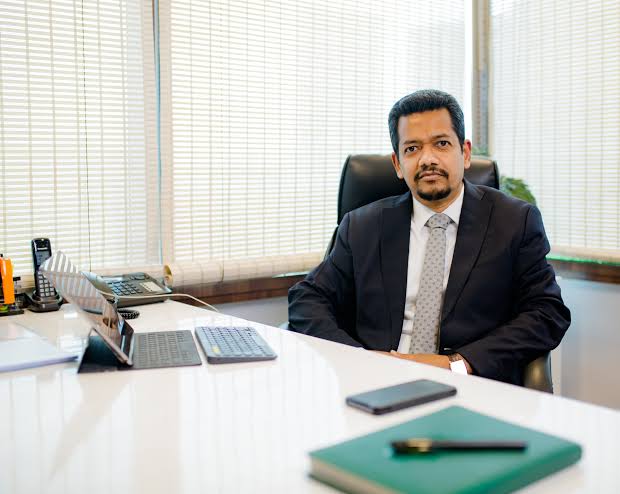
Shibashis Sarkar has been re-elected president of the Producers Guild of India at its 72nd annual general meeting, extending his leadership of one of the country's most influential film, television and digital-content industry bodies. The decision gives the Guild continuity at a time when Indian producers are navigating changing audience habits, rising production costs, evolving streaming economics and an increasingly complex relationship between theatrical releases and online distribution.
Why continuity at the Producers Guild matters
A trade association cannot determine which films succeed, but it can give producers a collective voice on rules that shape the business. The Guild engages with governments, broadcasters, exhibitors, digital platforms and other industry groups on matters ranging from taxation and filming permissions to copyright and workplace standards. Continuity in its presidency can help maintain negotiations that take longer than a single production cycle, especially when policy decisions involve several ministries or state authorities.
Sarkar's re-election also signals confidence from the Guild's membership in the direction of its recent work. Producers vary widely in scale: some operate major studios and streaming businesses, while others manage independent companies built around a small number of projects. A president must represent those different commercial realities without allowing the priorities of the largest members to eclipse the needs of smaller producers.
Indian screen entertainment is being reshaped
The industry Sarkar will represent is no longer divided neatly between cinema and television. A project may be developed for theatres, licensed to a streaming platform, adapted across languages and promoted through social media before reaching satellite television. Each stage creates different rights, revenue windows and contractual responsibilities. Producers increasingly need expertise in data, technology and international distribution alongside traditional creative and production skills.
Theatrical exhibition remains culturally important, but performance has become more uneven. Large event films can attract national audiences, while many mid-budget titles struggle to secure attention and screens. Streaming services offer another route to viewers, although platforms have become more selective after an earlier period of aggressive acquisition. The result is a tougher financing environment in which a recognisable cast or strong concept may not be enough without disciplined budgets and a clear release strategy.
Copyright and artificial intelligence move up the agenda
Copyright remains central to the value of a production company. Piracy, unauthorised clips and unclear licensing can reduce revenue across the life of a film or series. Generative artificial intelligence adds new questions about training data, synthetic performances, script development and the use of an artist's voice or likeness. Producers may use AI tools for visualisation, dubbing or workflow efficiency, but they also need consent rules and contracts that protect writers, performers and rights owners.
The Guild can help create common language for these negotiations. Individual contracts will still vary, yet baseline principles can reduce uncertainty and prevent disputes after a project is released. The strongest framework would distinguish between assistive production tools and uses that replicate protected work or a person's identity. It should also require clear disclosure when synthetic material could mislead audiences or affect professional credit.
Production conditions and professional standards
Another leadership priority is the working environment on sets. Long hours, safety planning, harassment prevention and timely payment affect thousands of freelancers whose livelihoods depend on project-based employment. Written policies matter only when productions provide trained personnel, reporting channels and consequences for violations. Industry bodies are well placed to share practical standards, but implementation must reach location shoots and smaller productions rather than remain limited to large studios.
India's different states also have distinct rules and approval processes. A more predictable single-window approach to permissions can reduce delays without weakening safety or local accountability. Film commissions and governments compete to attract productions through incentives, infrastructure and simplified procedures. The Guild's role is to help ensure that incentives are transparent, payments are reliable and producers understand the conditions attached to public support.
Global opportunity requires stronger business systems
Indian content travels across languages and borders more easily than before. Subtitling, dubbing and streaming distribution have expanded the potential audience for regional industries as well as Hindi-language productions. International growth, however, requires careful rights management, reliable delivery standards and marketing tailored to each territory. Co-productions add further complexity because partners must align finance, creative control, tax treatment and ownership across jurisdictions.
A trade body can support that expansion by building connections with overseas markets, explaining regulatory changes and encouraging professional systems that international partners recognise. It can also advocate for policies that treat the creative economy as both a cultural sector and an export industry. Success should not be measured only by isolated global hits, but by a repeatable environment in which a wider range of Indian producers can reach paying audiences abroad.
What Sarkar's new term will be judged on
Re-election is an organisational milestone, not an outcome on its own. Members will judge the next term by progress on financing conditions, copyright protection, production safety, regulatory efficiency and fair access to distribution. The Guild will also need to communicate clearly with workers and audiences, because decisions made by producers affect employment, ticket prices, creative diversity and public trust.
Sarkar begins the renewed mandate with the advantage of continuity and the burden of high expectations. Indian entertainment has enormous creative reach, but its business foundations are under pressure from rapid technological and economic change. Effective leadership will require practical consensus rather than ceremonial statements: specific standards, sustained policy engagement and solutions that work for companies of different sizes. The 72nd AGM has confirmed who will lead; the next test is what that leadership delivers.
PUBLISHED
BY
SUYASH PACHAURI,
FOUNDER & OWNER,
GLOBAL BOLLYWOOD | THE HOLLYWOOD SCOPE