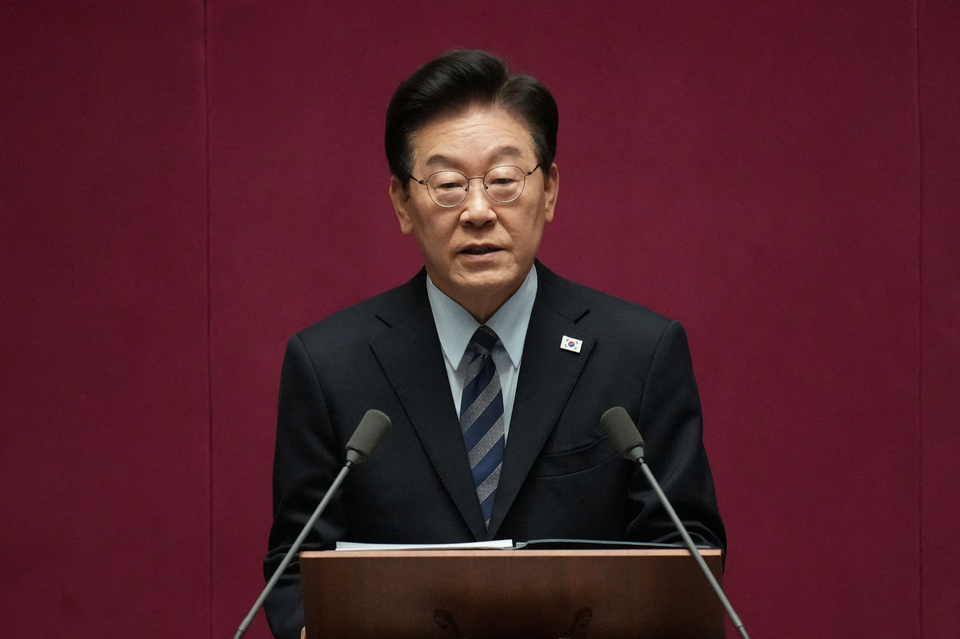
A Presidential Visit Puts AI Construction in Focus
South Korean President Lee Jae Myung has called for greater speed in the global artificial intelligence race after visiting a major data centre under construction in Ulsan. The project, being developed by SK Group with Amazon Web Services, represents one of the country's most visible efforts to turn industrial capacity into computing infrastructure. Lee presented the site as evidence that advanced technology investment can support regions beyond Seoul.
The South Korea Ulsan AI data centre carries an estimated cost of 7 trillion won, or about $5.2 billion, through 2029. Operations are expected to begin in the second half of 2027. The scale makes the project more than a conventional server facility. It is being positioned as infrastructure for cloud computing, artificial intelligence services and the expanding demand for high-performance chips.
The Capacity Planned for Ulsan
The first phase under construction is expected to provide 103 megawatts of capacity by 2029. SK Group has also discussed an expansion of nearly 900 megawatts beyond that initial stage. Those figures show why power supply, cooling, grid connections and construction skills are becoming central to national AI strategies. Computing ambition now depends on physical systems that can take years to finance and build.
The Ulsan site is intended to combine SK's industrial and telecommunications capabilities with cloud services from Amazon Web Services. The partners have described plans for an AI-focused zone that can serve customers in South Korea. The eventual shape of the project will depend on demand, power availability, construction progress and future partnerships, so later capacity should be treated as a plan rather than an already delivered asset.
Why Ulsan Matters Beyond Seoul
South Korea's technology economy is heavily concentrated around the capital region. Locating a large computing project in the southeastern industrial city of Ulsan offers a different model. It could connect digital infrastructure with established energy, manufacturing and logistics networks while spreading investment and skilled employment. Lee emphasized that regional growth can accompany the AI buildout when projects are placed outside their usual metropolitan cluster.
About 900 people were working at the site during the presidential visit. That workforce also highlighted an immediate constraint. Advanced facilities still require electricians, engineers, construction specialists and technicians in large numbers. Lee urged ministries to consider training for the people who build data centres, an important reminder that AI policy involves vocational capacity as well as researchers, software developers and semiconductor designers.
Data Centres and the Global AI Race
Countries competing in artificial intelligence increasingly view computing capacity as strategic infrastructure. Data centres provide the processors, storage and networking that train models and deliver services at scale. South Korea already has major strengths in memory chips, electronics and telecommunications. Expanding domestic computing capacity could help the country capture more value from those strengths while attracting global technology companies seeking reliable regional operations.
Lee's message about speed reflects concern that infrastructure decisions made today will shape competitiveness several years from now. A delayed grid connection or shortage of skilled workers can postpone access to computing capacity. At the same time, rushing construction without environmental and community planning can create opposition. The Ulsan project will be watched for how it balances pace with energy use, water needs and local benefits.
The Economic Promise and the Practical Questions
Large data centres can generate construction activity, demand for equipment and long-term technical roles. They may also attract software companies and research teams that need low-latency access to powerful systems. Yet the number of permanent jobs is usually smaller than the construction workforce, and the value to a region depends on whether surrounding businesses and educational institutions become part of the ecosystem.
Power is another defining question. A facility approaching gigawatt scale would require a reliable electricity supply and extensive transmission planning. The source of that electricity will influence costs and the project's environmental footprint. South Korea must also consider how competing data centres affect national grid priorities. These issues do not diminish the investment, but they determine whether its promised benefits can be sustained.
What Comes Next for the Project
Construction progress toward the planned 2027 opening will be the first measurable test. Investors and local communities will look for confirmed milestones on buildings, power connections, computing equipment and customer commitments. Expansion beyond the initial 103 megawatts will require its own financing and approvals, so the larger capacity goal should be evaluated phase by phase.
The project also offers a test of national coordination. Industry can supply capital and technology, while government can support workforce preparation, grid planning and transparent local engagement. If those pieces align, Ulsan could become a significant Asian computing hub. If they do not, scale alone will not guarantee that the centre produces the regional transformation its supporters expect.
The Ulsan development shows that the AI race is moving from model announcements into concrete, power-intensive infrastructure. South Korea's strengths give it a credible foundation, but delivery will depend on trained workers, energy planning and disciplined expansion. The next eighteen months will reveal whether the project can convert political urgency into operating capacity on schedule.
PUBLISHED BY SUYASH PACHAURI, FOUNDER & OWNER, GLOBAL BOLLYWOOD | THE HOLLYWOOD SCOPE.