A Tax Threat Without a Written Plan
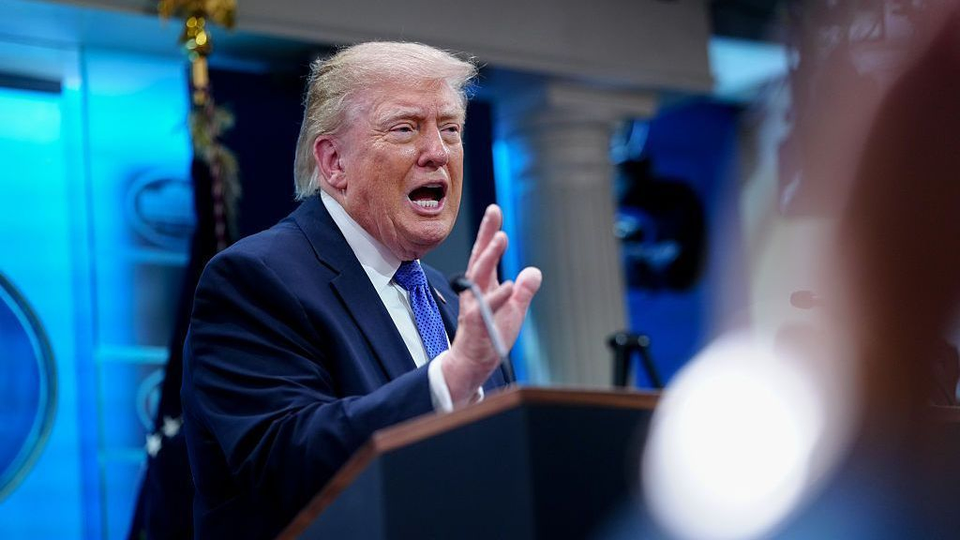
US President Donald Trump has threatened a large tax on American companies that build artificial intelligence data centres in other countries. He framed domestic construction as essential to maintaining an advantage over China and said companies would be allowed to invest abroad only at a significant cost. The statement was politically forceful, but it did not include a rate, legal authority, timetable or enforcement mechanism.
The Trump AI data centre tax threat should therefore be treated as a proposal voiced by the president, not an enacted policy. Trump said he had not yet told his staff about the idea. Agencies had not released implementing documents, and companies had received no formal rules. Any future action would require decisions about which investments count, how a tax would be calculated and whether Congress must approve it.
Why AI Infrastructure Has Become Political
Artificial intelligence systems require large clusters of processors, storage and networking equipment. Building those systems has become a major source of investment, construction work and electricity demand. Trump argues that locating them in the United States supports jobs, strengthens control over advanced computing and reduces the risk that strategic technology capacity moves overseas.
Many US technology companies already operate global data centres because customers need services close to where they live and because privacy laws can require local storage. Overseas facilities also support cloud computing that has little connection to training the most advanced models. A broad penalty could therefore affect ordinary international services as well as the frontier AI projects emphasized in political speeches.
Domestic Opposition Is Growing
The president's comments came as communities across the United States were becoming more skeptical of data centre construction. Residents have raised concerns about electricity prices, water consumption, noise, land use and the secrecy surrounding large projects. Recent voter surveys have shown substantial support for limits, including opposition from people in both major political parties.
Trump urged communities to negotiate for benefits rather than reject projects. He suggested that technology companies could provide reduced utility bills, money for schools, tax revenue or direct payments. Those ideas acknowledge that local acceptance cannot be assumed. They also raise questions about whether benefits would be guaranteed in enforceable agreements and whether they would fairly compensate communities for long-term infrastructure costs.
The Legal and Economic Questions
A tax aimed at overseas construction could take several forms, but each would face complications. It might target corporate income, imported services, foreign investment or specific transactions. Existing tax treaties and trade commitments could limit some approaches. A rule that singles out certain countries or technologies would need clear definitions to prevent companies from restructuring projects merely to avoid the charge.
Economists would also examine whether the threat changes investment or simply increases costs. Companies choose locations based on customers, power prices, regulation, network connections and political stability. A tax could encourage domestic building, but it could also make US providers less competitive in foreign markets. The effect would depend on details that the president has not supplied.
Energy Policy Sits at the Center
Keeping more data centres in the United States would increase pressure on power grids that are already struggling to connect new generation and transmission. The largest technology companies are expected to spend enormous sums on AI infrastructure, while many of the chips and materials used in those facilities are imported. Domestic construction does not automatically mean a fully domestic supply chain.
Congress is separately considering changes intended to speed permits for power plants and transmission lines while making data centres pay for the energy and grid upgrades they require. That debate may have more immediate practical impact than a tax threat. Without reliable power, faster approvals and transparent cost allocation, political demands for domestic construction could collide with physical limits.
What Would Turn the Statement Into Policy
The next evidence to watch is a formal proposal from the White House, Treasury Department or Congress. A credible plan would define covered companies, projects, countries, rates and exemptions. It would explain how existing overseas facilities are treated and whether the measure applies only to future investment. It would also address data localization obligations that may require US providers to maintain infrastructure abroad.
Until such a document exists, businesses cannot calculate their exposure and communities cannot know whether the proposal will change construction decisions. The statement signals the president's priorities and could influence negotiations, but it does not create a tax by itself. Careful coverage must preserve that difference while monitoring whether the administration converts political language into a workable rule.
The president has placed overseas AI infrastructure in the center of his economic agenda, yet the threatened tax remains undefined. Its significance will depend entirely on what follows: legislation, an executive proposal, agency guidance or no action at all. Until then, the immediate story is a policy signal shaped by global competition and domestic resistance, not a new legal obligation.
PUBLISHED BY SUYASH PACHAURI, FOUNDER & OWNER, GLOBAL BOLLYWOOD | THE HOLLYWOOD SCOPE.