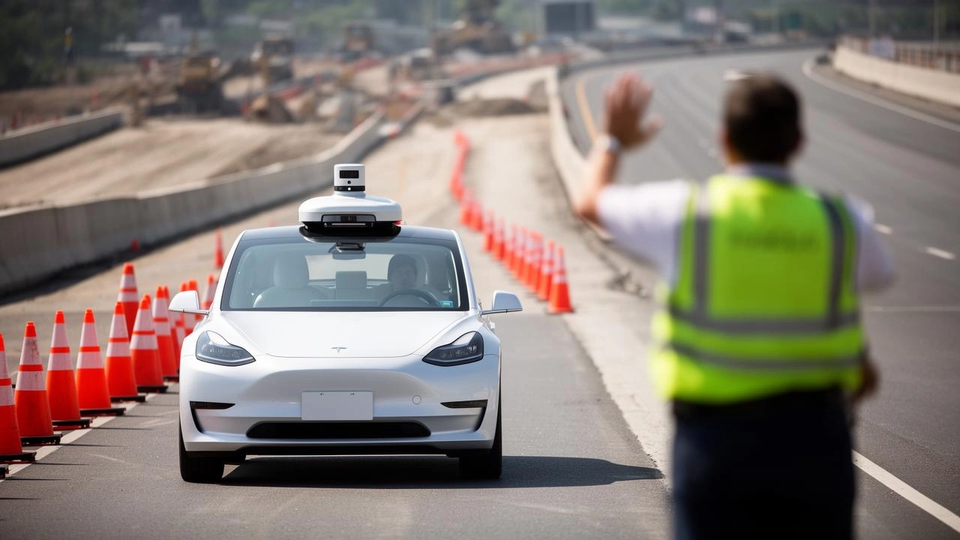
Two Recalls Target Unusual Road Conditions
Waymo has announced two safety recalls for its autonomous driving system after incidents involving closed freeway lanes and intersections managed by people using manual signals. The actions focus on situations that can be difficult for any automated system because ordinary lane markings and traffic-light logic may be temporarily replaced by cones, officers, emergency workers or construction crews.
The Waymo robotaxi recalls address different behaviors. One concerns vehicles entering or continuing through a freeway lane that has been closed. The other covers responses to directions given by law enforcement or other authorized personnel at intersections. The company has said it filed both actions with the federal vehicle safety regulator and is strengthening how the Waymo Driver handles these scenarios.
What Happened in the Closed-Lane Cases
The freeway issue involves unusual conditions in which an autonomous vehicle could move into a lane that had been marked closed and then continue driving there. The company said no collisions or injuries were reported in the events behind this recall. It is still working on the remedy, which means the final software response and deployment timetable remain important details for regulators and riders.
The recall follows wider scrutiny of freeway operations in California. State officials had barred the company's driverless vehicles from freeways after incidents involving active construction closures. Waymo subsequently paused those rides. A safe return will require more than recognizing a cone. The system must understand changing lane boundaries, worker instructions, emergency movements and the possibility that a temporary closure does not match its map.
Manual Traffic Control Requires Human Context
The second recall deals with manual commands at intersections. Traffic officers sometimes override signals, stop one direction and wave another through. Gestures may be brief, partially blocked or directed at several vehicles. Waymo said the relevant action followed a collision in a situation where a vehicle initially followed an officer's direction, but the officer then became temporarily obstructed from view.
A software update for that issue was completed on November 6. The recall process documents the safety concern and the remedy even when an update has already been deployed. That transparency allows regulators to review the event and gives the public a clearer record of how automated driving systems are corrected. It also shows why rare edge cases can remain important after millions of routine miles.
A Wider Federal Review of Waymo Vehicles
The recalls arrive while federal investigators are separately examining reports that Waymo vehicles passed stopped school buses displaying flashing red lights. That review covers nearly 3,000 company-owned vehicles and asks whether an earlier software remedy worked as intended. Separate agencies are also investigating an incident in which a driverless vehicle struck a child near a school in Santa Monica.
Those inquiries are distinct from the two newly announced recalls, but together they increase pressure on the company to demonstrate reliable performance around vulnerable road users and temporary controls. Autonomous systems are judged not only by average crash rates but also by whether they follow specific safety rules in settings where a single error can carry severe consequences.
Why Edge Cases Matter for Autonomous Driving
Robotaxis operate in environments that are designed around human interpretation. A police officer's raised hand, a construction worker's paddle or an improvised barrier can change the legal path through a road in seconds. Automated vehicles combine cameras, lidar, maps and learned behavior, but they must also decide which signal has priority when those inputs disagree. The recall scenarios expose the difficulty of that task.
Companies often argue that autonomous vehicles can reduce crashes compared with human driving. That claim is best evaluated with transparent data, comparable exposure and independent oversight. Even if overall performance improves, a system must still address recognizable failure patterns. Recalls are one mechanism for doing so, provided the remedy is tested, deployed across the fleet and monitored for recurrence.
What Riders and Regulators Will Watch
Riders do not need to install vehicle software themselves because the fleet is operated by the company. Their main concern is whether service is restricted while fixes are developed and whether routes avoid conditions the system cannot yet handle safely. Clear notices about freeway availability and operating boundaries will be essential, especially where rules differ between cities or states.
Regulators will examine incident data, the design of the closed-lane remedy and evidence that the manual-control update works in varied conditions. They may also compare the new fixes with earlier assurances. The outcome will influence more than one company. It could shape how the autonomous vehicle industry documents software defects and proves that remote updates have actually resolved them.
The recalls do not settle the broader debate over robotaxi safety, but they identify two concrete weaknesses that can be measured and corrected. Waymo now faces the practical test of completing the freeway remedy, demonstrating that manual directions are handled consistently and rebuilding confidence with regulators. Progress will be judged through results on real roads rather than promises about future capability.
PUBLISHED BY SUYASH PACHAURI, FOUNDER & OWNER, GLOBAL BOLLYWOOD | THE HOLLYWOOD SCOPE.